Thursday, December 19, 2019

SAL Welcomes Three Heavy Lift Vessels With 800t Capacity To Its Fleet

SAL Heavy Lift announced about that it will expand its fleet by adding three heavy lift vessels that will have a lifting capacity of 800t in 2020. Those vessels will serve the clients of breakbulk and heavy-lift through SALs which is popularly known as Semi-Liner Service however it will also provide with new service options.

With the addition of the three vessels, SAL aims to makes its semi-liner service stronger. It will also make SAL one of the leading company in the heavy lift and project cargo segment.

The new vessels will also follow the traditional categorizing of vessels at SAL and thus they will join the fleet as type ‘171’.

The design of the vessels is that of type P1. They are equipped with two 400t SWL cranes with the capability of lifting about 800 tonnes is tandem along with 120t SWL crane. They will offer service to the clients along the key trade lines of SAL which is between Europe and the Far East. However, it will also offer services in the recent introduction of SAL’s Africa service.

Karsten Behrens, Director, SAL Engineering said, “The Type 171 vessels come with certain technical features such as ice class E3, equivalent to Finnish/Swedish 1A – amongst the highest in the industry.”

The ships can also operate in the Arctic region. SAL will also provide transfers on the Northeast path whenever possible.

Karsten Behrens continued, “The vessels also have very high crane pedestals which provide a much greater lifting height, in fact amongst the best in our fleet. In combination with the strong hydraulic hatch covers and large box-shaped holds with multiple tween deck configurations, it gives us an array of options when taking break bulk cargo onboard.”

Sebastian Westphal, CTO, SAL Heavy Lift added, “The vessels are, as the rest of our fleet, equipped with reliable high-quality machinery. With cranes from TTS-NMF, main engines from MAN and MacGregor hatch covers, the vessels are built with equipment with which we have tremendous experience. Despite obvious design differences with our other vessels the Type 171 will be reliable work tools in our fleet and will add value.”

The fleet of SAL is getting strong at a time when a large part of its current fleet is engaged in projects related to renewable and oil & gas.

Dr. Martin Harren, CEO, SAL Heavy Lift said, “I am very happy that we have been able to add these vessels to our heavy lift fleet. This way SAL will be able to service clients who may at times look for ships that can take larger volumes of cargo in combination with heavy lift items. With SAL Engineering providing the engineering solutions and our SAL crew manning the vessels, we continue to offer our well-known SAL quality and know-how, but on a larger scale – something that I am sure clients, both new and existing, will come to appreciate.”

The vessels that are scheduled to join the join the SAL fleet in Q1 2020 are “MV Hanna”, “MV Klara” and “MV Lisa”. The names of these vessels represent the family members of the former owner, Heino Winter Group that will be handling the technical ship management of these vessels.

Dr. Martin Harren concludes: “We have a long-lasting relation with the Winter family, and I am happy to see their continued involvement with these three ‘large ladies’.”

The other details and information about the vessels like the specific take over dates can be found on the website of SAL.


Reference: SAL


from WordPress https://www.maritimemanual.com/sal-welcomes-three-heavy-lift-vessels-with-800t-capacity-to-its-fleet/

AAL Bangkok Loads 12 Floating Crafts, Including 51-Meter Superyacht

The perfect solution for ocean transport has been offered by AAL Bangkok for one of the leading yacht transport and boat shipping company which represents a particular group of private owners who want a Caribbean climate for their pleasure cruising this winter.

A compiled cargo of 12 floating cargo was loaded on the special heavy lift S-Class vessel of AAL in Genoa, Italy. It was then transported successfully to the Virgin Islands and Port Everglades.

The 3,500m2 cargo had a 51-meter superyacht that weighted 400t, which proved short work for the Bangkok’s heavy-lift cranes and their combined 700t max lift.

The Chartering Manager of AAL, Pavao Kopic, said that because of the cargo’s nature and value, AAL has been chosen by the customers for it’s reliable track record and the high lifting capability and cargo intake volume of the S-Class fleet.

The expanding Europe-US service of AAL which has the options of multiple tonnage and regular sailings was used for the transportation of the cargo.


Reference: AAL


from WordPress https://www.maritimemanual.com/aal-bangkok-loads-12-floating-crafts-including-51-meter-superyacht/

CSA 2020 Shipowners Offer Insight On EGCS Installations As IMO 2020 Looms

The Clean Shipping Alliance (CSA) 2020 are suggesting the shipowners who want to install marine exhaust gas cleaning systems in order to meet the requirements related to the global sulphur cap, to make sure that good quality and high end materials are being used by manufacturers, shipyards and installers.

Through the expertise that the members of CSA 2020 have gained after the installment of over 1500 EGCS, they have discovered that the quality of the material and coatings used is the key factor for the optimisation of EGCS safety and for the aversion of any corrosion related problem that occurs during operation.

“There are always some challenges involved when specifying ships’ machinery systems and scrubbers are no different,” said Arne Hubregtse, Executive Board Member, Spliethoff. “Risks can be mitigated, however, by investing in quality materials, established suppliers and experienced installers, and by optimising machinery space layouts.

“We have installations onboard about 50 vessels in the Spliethoff fleet and to date we have not experienced any corrosion or other significant issues through operating these systems. In addition to the specification of quality materials we recommend experienced installers with good supervision during the installation process.”

Roger Strevens, Vice President, Global Sustainability, Wallenius Wilhelmsen, said: “While EGCS failure is not impossible, just as it is with any machinery, we believe we have minimised the risk – particularly of early-onset severe failure – by being very judicious in how we specify the systems and through being particular in who we are getting them from. If you buy cheap, you’ll pay twice!”

Wallenius Wilhelmsen installed its first EGCS in 2014 knowing that, like any first-of-type-installation, there would be the inevitable teething troubles. “We learned a lot from that first installation. The experience proved invaluable to subsequent installations,” added Strevens.

More than 200 exhaust gas cleaning systems that are installed in 83 opearting vessels that come under the Carnival Corporation umbrella have also been greatly reliable. Mike Kaczmarek, Sr. Vice-President Marine Technology, Carnival Corp said that more than 90% of the present system is available.

Kaczmarek, CSA 2020’s Chairman, said: “We have found EGCS systems are designed for world-wide operations and normally meet or exceed the specification. However, there are a few things to be aware of and, for example, we do recommend that the upper bellows (expansion joints) above the EGCS tower are replaced with a design using upgraded alloys during the installation process. This can help prevent any subsequent corrosion. Selection of quality materials is important.”

Grimaldi Group that is responsible for operating four different EGCS in more than 50 vessels. It reported over 90% reliability.

Dario Bocchetti, Head of the Grimaldi Group Corporate Energy Saving & Innovation, said: “The expansion bellows after the scrubber and the exhaust gas line can create problems. It is important to use high quality steel or alloys and make sure anti-corrosion coatings have been properly applied to the discharge outlet. Good specification and subcontractor selection can prevent problems later.”

“By confirming the operational performance of our members’ EGCS installations, we hope to allay any concerns relating to system failure or corrosion,” said CSA 2020 Executive Director Ian Adams. “The technology, the materials used, and the experienced gained from those first installations means that any corrosion issues can now be readily resolved.”


Reference: CSA


from WordPress https://www.maritimemanual.com/csa-2020-shipowners-offer-insight-egcs-installations-imo-2020-looms/

Jan De Nul Successfully Wraps Up Liepaja Port Dredging

The capital dredging work for the enhancement of Liepaja Port in Latvia has been completed by Jan De Nul Group before the scheduled time.

For allowing the entrance and leave of bigger vessels completely loaded from the port, the access channel to the port was required to be adapted. As part of the Liepaja Port Water Infrastructure Works, the work of dredging was also given to Jan De Nul Group.

The work that was to be done by Jan De Nul Group included the removal of 2.7 million m³ of sediments in order to deepen the access channel of the port from 12.5 m to 14.5 m and the creation of a 14m new navigation channel of towards one of the main bulk terminals within the are of the port.

Challenging weather and soil conditions

Various weather and soil related challenges were faced by Jan De Nul Group during the project. Liepaja, which is one of the three major ports in Latvia is located along the west coast and is known for it’s low temperatures in winter and harsh weather conditions. The high waves that are seen constantly ain the Baltic Sea was a huge challenge for the Jan De Nul vessels, particularly during winter. The strong winds in Liepaja also had a great effect on the planning of the project.

The self-propelled Cutter Suction Dredger Fernão de Magalhães helped by three Split Hopper Barges was particularly selected for the dredging works because of the Baltic Sea’s heterogenous material. Very hard glacier sediments of sand, clay, stone and large boulders was to be removed by the Fernão de Magalhães.

Jan De Nul Group was able to deliver the project in just 9 months inspite of these harsh weather and soil conditions.

Mieke de Mûelenaere, Jan De Nul Project Manager of the Liepaja project: “We are proud to be able to finish the project 1.5 months ahead of schedule. Liepaja challenged us and we have succeeded. We are grateful to our colleagues of LSEZ for the constructive and positive cooperation which also led to this success.”


Reference: Jan De Nul Group


from WordPress https://www.maritimemanual.com/jan-de-nul-successfully-wraps-liepaja-port-dredging/

Høglund And DNV GL Join Forces To Improve Data Generation And Sharing In Industry

A Memorandum of Understanding (MoU) has been signed by Høglund Marine Solutions and DNV GL in order to help in the generation and export of big data from ships.

This measure will help in better digitalization of the marine sector by offering opportunity to Høglund for the development of their expertise in automation and systems and DNV GL an opportunity to improve their classification services.

“The digital transformation of shipping is finally happening and opens the door to many long-sought-after advantages and necessary progress”, says Børge Nova, CEO of Høglund Marine Solutions.

“For many years, Høglund has pointed to the lack of consistency in ship specifications on how important data shall be made available for all stakeholders. By combining Høglund’s expertise in how to create, standardize and export data through a vessel’s integrated automation systems with DNV GL’s industry knowledge and independent role we can provide owners and operators with a more accurate overview of a ship’s performance and compliance with regulations.”

The complexity of the vessels are increasing and large amounts of data is also generated. The ship owners and operators can take improved decisions about the operating costs, reliability, efficiency and safety of the ships by combining high quality data and methods that are seamless to reach and analyze. The marine sector still has a long way to go before it can take complete advantage of all the performance data. In order to do so, the industry needs to enhance data collection, exportation and use and to get experience from various fields for collaboration.

Jon Rysst, Senior Vice President and Business Development Leader, of DNV GL remarked: “We are very excited to enter into this partnership with Høglund. Data is already the fuel that is driving the transformation of many other industries, often as a result of collaborations between different fields of expertise. For DNV GL, this cooperation represents an opportunity to harness the power of data to improve our classification services and to develop added services based on our independent role.”


Reference: DNV GL


from WordPress https://www.maritimemanual.com/hoglund-dnv-gl-join-forces-improve-data-generation-sharing-industry/

Wednesday, December 18, 2019

Wärtsilä Vessel Traffic Service To Increase Efficiency Of Europe’s Second Largest RoRo Port

Vessel Traffic Service (VTS) solution will be supplied to Calais and Boulogne that are two of the major ports of France by the technology group Wärtsilä.

The Wärtsilä VTS will be responsible for the management of vessel traffic of these busy ports so as to deliver better efficiency in operation and safety. Région Hauts-de-France, the government entity responsible for the tender, placed this order in October, 2019 with Wärtsilä.

Planning and traffic monitoring is optimized by the system in order to bring down vessels waiting time and allow for just in time pilotage.

“Wärtsilä’s Smart Marine Ecosystem approach utilises connectivity and the latest digital technology to raise the efficiency and safety levels of not only individual ships and complete fleets, but also port operations as well. The VTS solution is a central part of this approach, which delivers tangible benefits to all the various stakeholders,” says Dmitry Rostopshin, General manager, Ship Traffic Control Solutions, Wärtsilä Marine.

A VTS simulator will also be supplied by Wärtsilä for the training of the staff at port. Calais will be the first port that will have it’s own advanced installed VTS stimulator in France. This project also comprises the delivery of two solid state IALA Advanced radars that will be a combined with the present radars of port and seven seven operator workshops.

The Wärtsilä VTS software has a broad range functions. The solution is modular, scalable, and can also be upgraded in the future.


Reference: wartsila


from WordPress https://www.maritimemanual.com/wartsila-vessel-traffic-service-increase-efficiency-europes-second-largest-roro-port/

ABS Releases Industry-Leading Study Of USD 246M In Injury Claims

ABS, the American Club, and Lamar University (Lamar) are urging the industry to move forward for safety at sea with better reporting needs for injury and near miss reporting.

This call comes after the industry wide project which analysed over 12,000 injury records that costed $246m and after that 100,000 near-miss reports from the ABS and Lamar Mariner Safety Research Initiative (MSRI) and nearly a decade of data from the American Club.

The study provides a very new insight about the type of accidents at sea however the inconsistency of data and proper in for has led to the American Club, ABS, and Lamar to urge the industry to take up new comprehensive standards for reporting about maritime injury.

“Nothing is more important to ABS than the safety of the men and women working at sea. This project offers a deeper insight into how and where seafarers are being injured and also highlights what industry can do to take our understanding of safety to the next level,” said Christopher J. Wiernicki, ABS Chairman, President and CEO.

According to the research, the incident of tripping/falling happen frequently at sea and injuries that are sustained during lifting or in slips. Over 1,300 such incidents are present in the data of the study. The American Club data shows that over $85m is the cost of these incidents for a period of six-year that was studied. The average cost per incident is more than $65,000 in which lifting incidents averaged $48,000, falls and trips averaged $88,000, slips averaged $56,000. As per the costs and anatomical locations, the two body parts that costed the most were the head and neck which came to an average of more than $100,000 per incident that was followed by the back and torso at $66,000.

Joseph Hughes, the Shipowners Claims Bureau’s Chairman and Chief Executive Officer, “Shipping is currently navigating through a digital era in which asset owners are increasingly able to use the power of operational data to predict potential failures. As those capabilities grow, the industry would be well counselled to also get ‘smarter’ about how it compiles and uses its safety data.”

“This industry, academic, and class partnership provided valuable insight into the financial impact of injuries across the maritime industry. This is another tool to help provide better solutions to help prevent the occurrence and reoccurrence of maritime injuries. We all believe that this partnership will help improve the welfare of the maritime industry’s most valuable asset: its seafarers,” said Dr. Brian Craig, Lamar University, Dean of Engineering and Co-Director of the Mariner Safety Research Initiative.


Reference: eagle


from WordPress https://www.maritimemanual.com/abs-releases-industry-leading-study-usd-246m-injury-claims/

15 Deepest Parts Of The Ocean

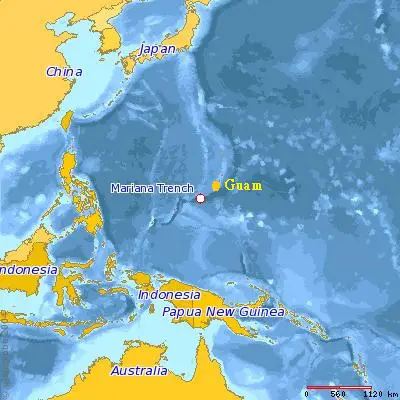
The earth is known as the ‘blue planet’ because of its blue appearance from space. This blue color obviously comes from the oceans on earth ...