Wednesday, October 2, 2019

LUKOIL’s New 40 BN Cylinder Oil Prevents Deposit Build-Up By Extra Detergency For 2020 Fuels

Customers were invited to a Technical Seminar in Athens by last month by LUKOIL Marine Lubricants. In this seminar they talked about the changing engine lubrication that the the shipping industry is going through because of the 2020 legislative changes and goals.

The Technical and Marketing Director of LUKOIL Marine, Stefan Claussen addressed the guest and talked about the uncertainties of the shipping fuel after 2020. He also discussed about the solutions of cylinder lubrication in the future majorly for very low and ulta low suphur fuel oils.

Claussen said, “It is expected that the vast majority of all vessels with MAN B&W engines will experience a trouble-free transition to max. 0.50%S fuels. We recommend beginning with 40 BN cylinder oil and evaluating the condition continuously.” According to Claussen, “the challenge is to create a sufficient level of detergency to avoid deposits in the engine”.

Kenny Park, Technical and Marketing Manager at LUKOIL Marine Lubricants explained: “Similar to 2012, when we launched our BN100 cylinder oil NAVIGO 100 MCL as a pre-emptive countermeasure against cold corrosion, we have already been anticipating in advance that with cylinder oil for all fuels up to 0.5%S the crucial factor will be cleaning capability rather than neutralization.”

“No 40 BN cylinder oil designed for pre-2020 low-sulphur residual fuels was covering distillate fuel operation sufficiently to handle 0.1%S and any 0.5%S fuels”, added Claussen, “So, we acquired major engine designers’ full Non-Objection Letters for our new extra-detergency BN40 cylinder oil NAVIGO MCL Extra on the basis of a successful field test in 2014 to 2017. Since then, we have been experiencing its excellent cleaning performance e.g. on engines running long-term on low sulphur fuel between Brazil and northern European ports.”

For distillate, ULSFO, VLSFO and low Sulphur heavy fuel oil (<1.5%S) application, the NAVIGO MCL Extra is a new 40 BN marine cylinder oil. Launched by LUKOIL Marine Lubricants in May 2017, it is approved for MAN, WinGD and J-ENG (Mitsubishi) engines.

“We developed NAVIGO MCL Extra in order offer our customers the best possible lubricant solutions in the years leading up to 2020 and beyond. Regardless of whether de-sulphurisation, MGO or distillate blends or any predominantly hydrocarbon blend with a maximum of 0.5% sulphur content or a 0.1%S limit in ECA – We are ready.”, says Claussen.


PR Reference: LUKOIL


from WordPress https://www.maritimemanual.com/lukoils-new-40-bn-cylinder-oil-prevents-deposit-build-extra-detergency-2020-fuels/

Svitzer Signs Deal For Two Innovative Icebreaking Tugs

The world’s leading towage operator, Svitzer has announced about its new deal with Turkish shipbuilders Med Marine relating to two new ice class tugs. These new 30m ice class tugs are expected to be delivered by Q4 2020 and Q1 2021. The 30 strong fleet of towage vessels that are in Scandinavian and Germany will be them.

As per the requirements of Svitzer, the tugs have been customized across it’s Scandinavian operations. Canadian naval architecture firm Robert Allan Ltd has created the design of the new TundRA 3000. It also has Finnish-Swedish ice class 1A status which gives the ice-breaking capabilities. For the generation of all directional propulsion force, azimuth stern drive (ASD) will be used. The minimum bollard pull being 60 tons.

An ultrasonic anti-fouling system will be installed in the vessels’ box coolers and the hull. This will eliminate anti-fouling paints need which will further help in the reduction of impact on the local environment. For the impending MARPOL Tier lll NOx regulations, they have also futureproofed the main engine rooms. Preparation for selective catalytic reduction technologies will be done.

The Svitzer’s oldest vessel Svitzer Helios and Svitzer Dynamic will be replaced with the new tugs. The bullard pull for these are below 40 tons which makes the new design a definite upgrade compared to the old ones.

Speaking on the deal, Mattias Hellström, Cluster Managing Director, Scandinavia & Germany, Svitzer, said: “We are delighted to have closed this deal with Med Marine to build our two new custom designed TundRA 3000 icebreaking tugs. In addition to upgrading our Scandinavian harbour towage fleet, this move also secures our long-term icebreaking capabilities in the region.

“The new arrivals will allow us to finally retire our last two conventional icebreaking tugs from the Scandinavian fleet, each after more than four decades of service. The new tugs are truly custom designed for the requirements of the Scandinavia region, highlighting Svitzer’s commitment to pushing the boundaries for towage.”

R. Hakan Sen, CEO, Med Marine, said: “We are pleased to have signed this agreement with Svitzer to build two new icebreaking tugs for their Scandinavian fleet. As an organisation, Med Marine is committed to the highest standards, so it is a natural fit for us to work with Svitzer to build these new vessels at our group-owned Eregli Shipyard. We are excited to get to work and to deliver these vessels between Q4 2020 and Q1 2021.”

The vessels will serve the ports of Denmark and Sweden which will be operating across Scandinavian. The vessels have been so built that they can easily navigate the Trollhatan’s locks which will enable ice breaking on both river as well as Lake Vanern.


PR Reference: Svitzer


from WordPress https://www.maritimemanual.com/svitzer-signs-deal-for-two-innovative-icebreaking-tugs/

Tuesday, October 1, 2019

Mitsubishi Shipbuilding Receives Order For Two Large Ferries From Shin Nihonkai Ferry

Shin Nihonkai Ferry Co., Ltd has ordered for two large, high speed ferries from Mitsubishi Shipbuilding Co., Ltd., that is a Group company of Mitsubishi Heavy Industries, Ltd. (MHI) which is based in Yokohama. The construction of these vessels will take place at MHI’s Nagasaki Shipyard & Machinery Works’ Tategami Main Plant. The vessels are to be completed and delivered in 2021.

The dimensions of the two ferries will be 222.5m long, 25m wide, 20.4m deep, a draft of 7.4m and gross tonnage of approximately 15,400. It will approximately have a capacity of 268 passengers, 154 trucks and 30 cars.

Both the ships will have amenities like three storeys high atrium entrance with see through elevator, outdoor bathing facilities so that the passengers can enjoy the hot springs and to enhance their dining experience with marine view there will be restaurant/barbeque area.

New optimal hull type will be used in the new vessels which will give energy efficiency of about 6% as compared to the running ships. For the four main engines and three electric generators and to control the emission of sulphur oxide the ships will have scrubbers.

The ‘modal shift’ is moving ahead in the transportation economy of Japan. This is going on both on land and marine transportation for reducing the emission of CO2 and against the problem of shortage of long distance truck drivers. This change has led to the increase in the demand for domestic ships and RORO vessels that have larger capacity.

The organisational structure to build the required kinds of ships will be consolidated in Nagasaki whereas the works to enlarge the building facility capability like anchoring piers and cranes will be done in Shimonoseki. By increasing their capability to construct ferries, RORO ships and highly outfitted ships, Mitsubishi will be able to accommodate various needs of their clients. This increment program will now also be handled in the Tategami Main Plant of Nagasaki Shipyard.

Cargo carriers and transport vessels that are fuel efficient and environmental friendly will be produced by Mitsubishi Shipbuilding. This way it will continue to solve the various challenges meanwhile giving importance to marine transportation and contributing to the protection of the environment in the global community.

Reference: mhi


from WordPress https://www.maritimemanual.com/mitsubishi-shipbuilding-receives-order-two-large-ferries-shin-nihonkai-ferry/

SHI To Become The First Shipbuilder To Develop COTs Powered By Fuel Cells

DNV GL gave SHI AiP for the A-max Tankers that use fuel cells which are more efficient and reduce the emission of the greenhouse gases. As the IMO forces shipbuilders to reduce GHG emissions by 30% since 2025, the introduction of fuel cells is inevitable, said an official of SHI.

The use of hydrogen has brought in a great competitor in the LNG fuel cell race. This will further develop the vessels that are powered by clean energy.

The worlds first Aframax crude oil tankers (COTs) has been developed by Samsung Heavy Industries, making it the first shipbuilder to do so. It applies fuel cells that limit CO2 emissions thereby adhering to the IMOs regulations and making its vessels eco-friendly.


SHI made an announcement about receiving the AiP for the fuel cell powered A-max COTs from DNV GL on the 26th of September.


The new fuel cell powered COTs are an eco-friendly replacement for the oil-based power generators which have solid oxide fuel cells and use LNG as fuel. This will not only improve the energy effeiciency but will also reduce the emission of greenhouse gases.


By replacing 3MW generator engines with the fuel cells in a A-max COT, the emission of GHG can be reduced by 45% which is equal to removing 10,000 combustion-powered cars from the roads worldwide.


The SOFCs that boasts the stability of the vessels were commercialized by the Bloom Energy of the U.S. for the first time. The fueling system and power control system for fuel cells that are the core manufacturing process were developed by the Samsung Heavy Industries themselves. It is the first shipbuilder to get an AiP for COTs that are powered by fuel cells, have high volumes and can be deployed without changing the design of the vessels.

SOFCs can use hydrogen as fuel for fuel cells along with LNG. In addition to this it is being anticipated that on the basis of the approved technology zero-emission hydrogen vessels will be built.

As regulations to reduce GHG emissions take effect step by step, the introduction of fuel cells to vessels is inevitable. This approval and being the first shipbuilder to secure this marine fuel cell technology illustrates that Samsung Heavy is highly likely to lead the market, said Kyunghee KIM, Vice President of SHI.

The IMO since 2018 has been stressing over the setup of Energy Efficient Design Index (EEDI) by taking steps to reduce the generation of GHG from vessels and also to maintain the target from the time that the vessels are designed.

According to the IMO regulations, the IMO registered ships are to decrease emissions by 10% from 2015, 20% from 2020, and more than 30% from 2025 compared to the 2008 level. Recently, IMO has become even stricter about its regulations. Thus, there are discussions going on that the targets will be strengthened to 40% in 2030 and 70% in 2050.


PR Reference: SHI


from WordPress https://www.maritimemanual.com/shi-become-first-shipbuilder-develop-cots-powered-fuel-cells/

Indian Container Market Expected To Grow Further: Hapag-Lloyd Launches Two New Services

With the growing demand, Hapag-Lloyd has decided to offer more services from and to India. In October two new services that come into operation are South-East India – Europe Express (IEX) and the Middle East-India-Africa Express (MIAX).

These will strengthen the position of Hapag-Lloyd in the Indian market and will help in connecting the country with North Europe and Africa further “We believe in serving the needs of all Indian customers. To do that, comprehensive service coverage is essential and the IEX and MIAX will be an optimal addition to our existing service portfolio” says Dheeraj Bhatia, Senior Managing Director of Hapag-Lloyd’s Region Middle East.

“Hapag-Lloyd has a strong network of services connecting key markets through Indian ports. The launch of two new services – IEX and MIAX – will create stronger opportunities for EXIM cargo and for Indian manufacturers to cater to global markets. At DP World, it is our constant endeavour to deliver the best services to our partners in the supply chain with highest levels of efficiency. We are extremely pleased to be chosen by Hapag-Lloyd yet again as it reinforces their confidence in our capabilities to add value to trade. We will work closely with Hapag-Lloyd to ensure that customers benefit from our multi modal logistics capabilities in the country to effectively manage their supply chains” adds Rizwan Soomar, CEO and Managing Director, DP-World Indian sub-continent, one of the leading terminal providers in the country.

The only direct connection between South and East India and Europe will be provided by the new IEX. The ONE, YML and COSCO operated weekly service that will have nine 6,500 TEU vessels is scheduled for its first departure on 26 October. It will have four Hapag-Lloyd ships.

The MIAX which will be launched on the 12th of October will help in supporting the increased transport capacity demand between India and Africa. MIAX will be operated by Hapag-Lloyd jointly with ONE. Nine 2,800 TEU capacity vessels will serve in this route. It will have five Hapag-Lloyd ships.

It’s been 12 years since Hapag-Lloyd entered the Indian market. It now offers 12 services and has 14 offices in the country. “In recent years we have seen strong growth in our transport volumes and market share, and have roughly a market share of around 9%. There is great potential for further growth in India and the new IEX and MIAX services are a step into that direction” confirms Dheeraj Bhatia.

Ever since its establishment, Hapag-Lloyd has grown and employs over 2,000 experts in India and Indians being the largest group of nationalities in the global Hapag-Lloyd organization.


PR Reference: hapag-lloyd


from WordPress https://www.maritimemanual.com/indian-container-market-expected-grow-hapag-lloyd-launches-two-new-services/

One Of World’s Most Advanced Polar Ship ‘RRS Sir David Attenborough’ Officially Named

At a naming ceremony held at Cammell Laird’s Birkenhead, UK shipyard on the 26th of September 2019, one of world’s most advanced polar research vessels was named RRS Sir David Attenborough.

More than 600 invited guests and above 4,000 public members attended the event. In the event the centerpiece was represented in a three day celebration of British science, shipbuilding and engineering. Including the school and family days.

As one of the most advanced research system, Kongberg’s integrated system is important for the vessel’s position. The RRS Sir David Attenborough was commissioned by the Natural Environment Research Council and Cammell Laird constructed it for operation with British Antarctic Survey. It was made to carry out intensive, multi-disciplinary missions of scientific significance, with minimal impact on the ocean environment it will be used to study.

“KONGSBERG has supported development of the RRS Sir David Attenborough from the very early days, helping us to realise our vision for such a unique and pioneering ship. Our missions will take us to the most remote areas with the most extreme conditions, but we are confident that the technology onboard will enable safe navigation and control, as well as capture of the data our scientists need to address the environmental challenges that we all face today, and in the future,” said Professor Dame Jane Francis, Director of British Antarctic Survey.

Kongsberg Maritime includes the sophisticated, green, cost-effective solutions that include energy management system, cutting edge sensors and robotic technologies that are operated remotely. They all come under it’s ‘Full Picture’ scope of delivery. The design of RRS Sir David Attenboroug is both fuel and logistic efficient. It is to save about £100 million in the operating expenditure over 30 years of life-span.

“Knowing the importance of deep-ocean and under-ice research, it’s an honour to be trusted with enabling safe and efficient marine operations on the RRS Sir David Attenborough, as well as providing the platform for the data capture and analysis that will engender new scientific insight. We wish all those working onboard every success, and anticipate some amazing findings as the ship embarks on the first of its long research voyages,” said Egil Haugsdal, President, Kongsberg Maritime.


TWO MINUTES WITH THE MAN IN CHARGE…

Kongsberg Maritime caught up with Captain Will Whatley, Master of the Royal Research Ship, Sir David Attenborough, working for the British Antarctic Survey.

KM: It’s an exciting day today with great anticipation. What does a day like this mean to you?

WW: This is a huge moment in my career. It’s been a long time that I’ve been involved in this project, since July 2016, so it’s been a huge amount of effort to get to this major and final milestone in the construction of this fantastic ship.

KM: So, what’s next in terms of sea trials? What’s left to do in the yard before sea trials commence?

WW: At the moment, we’re in the final stages of internal outfit, and we’re commissioning the systems. We’ve still got plenty of testing to do alongside, just to make sure that the ship is safe to go to sea. Once all of that is complete, we’ll initially go to sea on yard sea trials, and then come back in, and we’ll then transfer ownership to us, and we’ll then commence our scientific sea trials, which will include things like icebreaking, and testing with helicopters… it will be very involved.

KM: So, a chance to put her through her paces in the real environment she has been designed for.

WW: That’s right, yes.

KM: In terms of the design – obviously, formerly a Rolls-Royce design and now a KONGSBERG design – what are you looking forward to about the structure and the design of the hull form in particular, as an experienced captain? What do you think this will bring you?

WW: Well, Rolls-Royce, now Kongsberg, were given a big challenge to try and fit lots of features into one hull, and as such they’ve had to make lots of compromises. But I think, considering that the specification they were given, to try and fit all of these capabilities into one hull, they’ve done really well, and I think that the ship will handle well. I’m really looking forward to trying it.

KM: Can you describe the worst of the conditions that you’ve faced in your career, and how you think a ship like this could handle them?

WW: The worst conditions are either big sea states or heavy ice. We do experience a lot of Southern Ocean storms with massive seas, and there’s no shelter, but the ship is designed to withstand that, and there’s no reason why she won’t do so.


PR Reference: Kongsberg Maritime


from WordPress https://www.maritimemanual.com/one-worlds-advanced-polar-ship-rrs-sir-david-attenborough-officially-named/

MOL Group Successfully Develops Car Carrier Allocation/Loading Plan With AI

An allocation plan for a vessel and a cargo loading plan for car carriers which is based on ‘mathematical optimization’ has been developed by Mitsui O.S.K. Lines, Ltd. (MOL) and its group company MOL Information Systems, Ltd. announced that, along with Associate Professor Shunji Umetani of Graduate School of Information Science and Technology, Osaka University.

MOL can now with this advance technology complete allocation of vessels and loading plans quicker than ever.

Around 100 car carriers and around 5,000 standard passenger cars, cargo capacity per ship is operated by MOL. The transportation and logistics pattern of automakers and other shippers has been changing. Efficiency in vessel allocation and loading of cargo are of at most importance to make sure that the fleet is operating in the most efficient way thereby meeting customer requirements.

For example, The safety and efficiency of the cargo operations is affected by the deck and the hold where the cargo is loaded, when the vessel is calling a number of loading and unloading ports. The order of cargo loading/unloading and hull balance during the voyage has to be considered. A longer time is taken to develop a plan for loading which depends upon the plan’s difficulty level and the planner’s skills.

In the study that was done in cooperation with Associate Professor Umetani an algorithm was developed by two teams that will generate a plan using mathematical optimization from a large number of combinations. The potential of the practical use of this technology will be assessed by both the teams. Thus, through digitalization the services can be imporoved and the time required to respond to the customer in case of change in the transport volume or port calls order is also reduced.

The MOL Group takes an active stand to promote the practical use and application of ICT and makes use of the specialized knowledge of each division. The major goal is to make the shipping group the customer’s first choice when it comes to transport and logistics.


PR Reference : MOL


from WordPress https://www.maritimemanual.com/mol-group-successfully-develops-car-carrier-allocation-loading-plan-ai/

15 Deepest Parts Of The Ocean

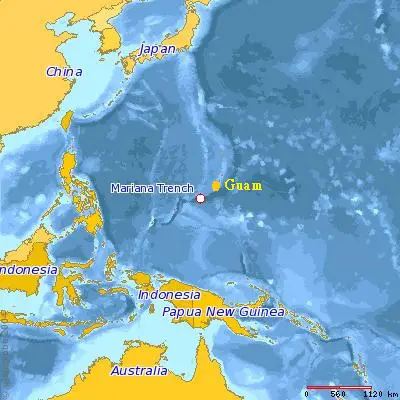
The earth is known as the ‘blue planet’ because of its blue appearance from space. This blue color obviously comes from the oceans on earth ...